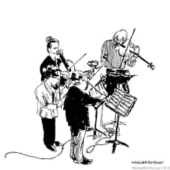

Vocals by tenor Daniel Bates with piano accompaniment by Keisuke Nakagoshi.
Sheet Music and Liner Notes
All the texts come from Palgrave's Golden Treasury. These were presumably the 'best songs and lyric poems in the English language and the most famous poetry anthology ever complied.'
I had no selection method.
This is not a song cycle as there is no musical fragment running through any group of the songs. I admit I wish I could/would try to do that.
I chose to divide the 15 songs into 3 groups based more or less on the character of the poem.
Group I
The first group are mostly 'folk songs' dealing with an individual's response to a romantic experience.
- Love Not Me (PDF) (Sibelius) (Notes)
-
1. Love not me for comely grace,
used by John Wilbye's Second Set of Madrigals

            By Anonymous
            17th Century
	LOVE not me for comely grace,
	For my pleasing eye or face,
	Nor for any outward part,
	No, nor for a constant heart:
        	 	For these may fail or turn to ill,
        		 So thou and I shall sever:
	Keep, therefore, a true woman's eye,
	And love me still but know not why--
        	 	So hast thou the same reason still
        	 	To doat upon me ever!
This has a long introduction hopefully designed to build to a 'dramatic' opening where the self-assured singer starts praising his virtues and then, a bit concerned by his own ego, begins to embrace humility and cover his aggressiveness with whimsy.
-
- The Rover's Adieu (PDF) (Sibelius) (Notes)
-
2. Sir Walter Scott. 1771–1832

 The Rover's Adieu

A WEARY lot is thine, fair maid,
  A weary lot is thine!
To pull the thorn thy brow to braid,
  And press the rue for wine.
A lightsome eye, a soldier's mien,
  A feather of the blue,
A doublet of the Lincoln green—
  No more of me ye knew,
        My Love!
No more of me ye knew.

'This morn is merry June, I trow,
  The rose is budding fain;
But she shall bloom in winter snow
  Ere we two meet again.'
—He turn'd his charger as he spake
  Upon the river shore,
He gave the bridle-reins a shake,
  Said 'Adieu for evermore,
        My Love!
And adieu for evermore.'
The pompous singer has just finished his one night stand and is ‘splitting the scene.'
-
- The Outlaw (PDF) (Sibelius) (Notes)
-
	3. Sir W. Scott

	. The Outlaw

O BRIGNALL banks are wild and fair,
  And Greta woods are green,
And you may gather garlands there
  Would grace a summer-queen.
And as I rode by Dalton Hall
  Beneath the turrets high,
A Maiden on the castle wall
  Was singing merrily:
"O Brignall banks are fresh and fair,
  And Greta woods are green;
I'd rather rove with Edmund there
  Than reign our English queen."

"If, Maiden, thou wouldst wend with me,
  To leave both tower and town,
Thou first must guess what life lead we
  That dwell by dale and down.
And if thou canst that riddle read,
  As read full well you may,
Then to the greenwood shalt thou speed
  As blithe as Queen of May."
Yet sung she, "Brignall banks are fair,
  And Greta woods are green;
I'd rather rove with Edmund there
  Than reign our English queen.

"I read you, by your bugle-horn
  And by your palfrey good,
I read you for a ranger sworn
  To keep the king's greenwood."
"A ranger, lady, winds his horn,
  And 'tis at peep of light;
His blast is heard at merry morn,
  And mine at dead of night."
Yet sung she, "Brignall banks are fair,
  And Greta woods are gay;
I would I were with Edmund there
  To reign his Queen of May!

"With burnish'd brand and musketoon
  So gallantly you come,
I read you for a bold dragoon
  That lists the tuck of drum."
"I list no more the tuck of drum,
  No more the trumpet hear;
But when the beetle sounds his hum
  My comrades take the spear.
And, oh! though Brignall banks be fair
  And Greta woods be gay,
Yet mickle must the maiden dare
  Would reign my Queen of May!

"Maiden! a nameless life I lead,
  A nameless death I'll die;
The fiend whose lantern lights the mead
  Were better mate than I!
And when I'm with my comrades met
  Beneath the greenwood bough,
What once we were we all forget,
  Nor think what we are now.
Chorus
Yet Brignall banks are fresh and fair,
  And Greta woods are green,
And you may gather garlands there
  Would grace a summer-queen.
The glamorized ‘Outlaw’ has cast his spell on another maiden! He tries to cool her off as she fantasizes about who he might be.
A palfrey is a horse - non-war type.
Musketoon is a small musket.
Dragoon is a mounted warrior.
-
- Jock of Hazeldean (PDF) (Sibelius) (Notes)
-
Sir Walter Scott (1771-1832)
		  Jock of Hazeldean

              "Why weep ye by the tide, ladie?
                    Why weep ye by the tide?
              I'll wed ye to my youngest son,
                   And ye sall be his bride:
               And ye sall be his bride, ladie,
                   Sae comely to be seen"--
               But aye she loot the tears down fa'
                   For Jock of Hazeldean.

              "Now let this wilful grief be done,
                  And dry that cheek so pale;
              Young Frank is chief of Errington,
                  And lord of Langley-dale;
              His step is first in peaceful ha',
                 His sword in battle keen"--
              But aye she loot the tears down fa'
                  For Jock of Hazeldean.

              "A chain of gold ye sall not lack,
                  Nor braid to bind your hair;
              Nor mettled hound, nor managed hawk,
                  Nor palfrey fresh and fair;
             And you, the foremost o' them a',
                  Shall ride our forest queen"--
             But aye she loot the tears down fa'
                  For Jock of Hazeldean.

            The kirk was deck'd at morning-tide,
                  The tapers glimmer'd fair;
            The priest and bridegroom wait the bride,
                  And dame and knight are there.
              They sought her baith by bower and ha';
                  The ladie was not seen!
              She's o'er the Border and awa'
                  Wi' Jock of Hazeldean.
The first stanza of this song is ancient. The others were written for Alexander Campbell's Albyn's Anthology (1816).
My impression of the ‘awkward’spelling is that it reflects the way the words were witten or at least pronounced.. e.g. ‘sall’ is ‘shall’
I assume ‘wilful’ is ‘willful’; I must admit I never looked up ha’ but it must be hall to rhyme with fa’=fall. Same with a’=all in the next verse
I assumed ‘loot’ ts always let
‘kirk’= church, tapers are candles, and baith is ‘both’
-
- Beauty's Daughters (PDF) (Sibelius) (Notes)
-
5....  Lord Byron

		"There be none of Beauty's daughters"

		THERE be none of Beauty's daughters
		 With a magic like thee;
		And like music on the waters
 		Is thy sweet voice to me:
 		When, as if its sound were causing
		The charmed ocean's pausing,
		The waves lie still and gleaming,
		And the lull'd winds seem dreaming:

		And the midnight moon is weaving
	          Her bright chain o'er the deep,
		Whose breast is gently heaving
		 As an infant's asleep:

		So the spirit bows before thee
		To listen and adore thee;
		With a full but soft emotion,
		Like the swell of summer's ocean.
I can’t think that any explanation of the poem is needed.
-
Group II
These are, more or less, dramatic narratives.
- Willie Drown'd in Yarrow (PDF) (Sibelius) (Notes)
-
6 Anonymous

Willie Drowned in Yarrow

DOWN in yon garden sweet and gay
  Where bonnie grows the lily,
I heard a fair maid sighing say,
  "My wish be wi' sweet Willie!

"Willie's rare, and Willie's fair,
  And Willie's wondrous bonnie;
And Willie hecht to marry me,
  Gin e'er he married ony.

"O gentle wind, that bloweth south,
  From where my Love repaireth,
Convey a kiss frae his dear mouth,
  And tell me how he fareth!

"O tell sweet Willie to come doun
  And hear the mavis singing,
And see the birds on ilka bush
  And leaves around them hinging.

"The lav'rock there, wi' her white breast
  And gentle throat sae narrow;
There's sport eneuch for gentlemen
  On Leader haughs and Yarrow.

"O Leader haughs are wide and braid,
  And Yarrow haughs are bonnie;
There Willie hecht to marry me,
  If e'er he married ony.

"But Willie's gone, whom I thought on,
  And does not hear me weeping;
Draws many a tear frae true love's e'e
  When other maids are sleeping.

"Yestreen I made my bed fu' braid,
  The night I'll mak' it narrow,
For a' the livelang winter night
  I lie twined o' my marrow.

"O came ye by yon waterside?
  Pou'd you the rose or lily?
Or came you by yon meadow green,
  Or saw you my sweet Willie?"

She sought him up, she sought him down,
  She sought him braid and narrow;
Syne, in the cleaving of a craig,
  She found him drown'd in Yarrow!
The poem is a straight forward narraitve of the lady seeking her lover and finding him drowned.
In my view she has her suspicions even at the start - and I tried to suggest that in the music. Most of the dialect-noted words are easy to translate and it wouldn’t matter to anglicize some. “Leader haughs is a commonly used geographic feature used in many poems - I never tried to find it.
The main melody is my “how dry I am music”. Many years earlier I heard a Bernsein lecture that every composer had music growing out of the ‘how dry I am’ tune--this is mine. (I am VERY fond of Strauss’ Death and Transfiguration, also ‘how dry I am’.)
So now I am a composer.
-
- Lord Ullin's Daughter (PDF) (Sibelius) (Notes)
-
Lord Ullin's Daughter :

By Thomas Campbell

A Chieftain, to the highlands bound,
Cries, "Boatman, do not tarry!
And I'll give thee a silver pound
To row us o'er the ferry!"-

"Now, who be ye, would cross Lochgyle,
This dark and stormy weather?"
"0, I'm the chief of Ulva's isle,
And this, Lord Ullin's daughter. -

"And fast before her father's men
Three days we've fled together,
For should he find us in the glen,
My blood would stain the heather.

"His horsemen hard behind us ride;
Should they our steps discover,
Then who will cheer my bonny bride
When they have slain her lover?" -

Out spoke the hardy Highland wight,
"I'll go, my chief- I'm ready:
It is not for your silver bright,
But for your winsome lady:

"And by my word! the bonny bird
In danger shall not tarry;
So, though the waves are raging white,
I’ll row you o'er the ferry."

By this the storm grew loud apace,
The water-wraith was shrieking;
And in the scowl of heaven each face
Grew dark as they were speaking.

But still as wilder blew the wind,
And as the night grew drearer,
Adown the glen rode armed men,
Their trampling sounded nearer.

"0 haste thee, haste!" the lady cries,
''Though tempests round us gather;
I'll meet the raging of the skies,
But not an angry father."

The boat has left a stormy land,
A stormy sea before her, --
When, O! too strong for human hand,
The tempest gather'd o'er her.

And still they row'd amidst the roar
Of waters fast prevailing:
Lord Ullin reach’d that fatal shore,
His wrath was changed to wailing.

For, sore dismay'd through storm and shade,
His child he did discover: --
One lovely hand she stretch'd for aid,
And one was round her lover.

"Come back! Come back!" he cried in grief
"Across this stormy water:
And I'll forgive your highland chief,
My daughter! - 0 my daughter!"

'Twas vain: the loud waves lash'd the shore,
Return or aid preventing:
The water wild went o'er his child,
And he was left lamenting.
This is a favorite of mine. 14 verses all with the same tune, which itself is 2 identical phrases a whole note apart. I think I kept it intesting with its dynamics, mode, tempo, and key changes.
The story is simple and often used as a vehicle for children ot produce a ‘dramatic’ action reading.
-
- A Widow Bird (PDF) (Sibelius) (Notes)
-
P. B. Shelley
"A widow bird sate mourning for her Love"

A WIDOW bird sate mourning for her Love
  Upon a wintry bough;
The frozen wind crept on above,
  The freezing stream below.

There was no leaf upon the forest bare.
  No flower upon the ground,
And little motion in the air
  Except the mill-wheel's sound.
As Shelley said, "Poetry is at once the centre and circumference of knowledge."
-
- A Sea Dirge (PDF) (Sibelius) (Notes)
-
William Shakespeare (1564–1616)

		A Sea Dirge

 FULL fathom five thy father lies:
 Of his bones are coral made;

Those are pearls that were his eyes:
    Nothing of him that doth fade,
But doth suffer a sea-change
   Into something rich and strange.
Sea-nymphs hourly ring his knell:
  Hark! now I hear them,—
      Ding, dong, bell.
Well known as a ‘Dark poem’: from the Tempest
I’m not well versed in the specialized language of poetry so I copy an article fro internet:
Poetry written with a Dark theme such as the poem Full Fathom Five Thy Father Lies by William Shakespeare is piece of literature written by the poet in meter or verse expressing various emotions which are expressed by the use of variety of techniques including metaphors, similes and onomatopoeia. The emphasis on the aesthetics of language and the use of techniques such as repetition, meter and rhyme are what are commonly used to distinguish Dark poetry from Dark prose. Poems often make heavy use of imagery and word association to quickly convey emotions. A famous example of Dark poetry is the poem Full Fathom Five Thy Father Lies by William Shakespeare.
Having read this I still don’t know anything.
But I like the sound and feel of the poem and set it as I felt it.
-
- La Belle Dame (PDF) (Sibelius) (Notes)
-
John Keats. 1795–1821

 Las Belle Dame sans Merci

'O WHAT can ail thee, knight-at-arms,
  Alone and palely loitering?
The sedge is wither'd from the lake,
      And no birds sing.

'O what can ail thee, knight-at-arms,
  So haggard and so woe-begone?
The squirrel's granary is full,
      And the harvest 's done.

I see a lily on thy brow
  With anguish moist and fever dew;
And on thy cheeks a fading rose
      Fast withereth too.'
'I met a lady in the meads,
  Full beautiful—a faery's child,
Her hair was long, her foot was light,
      And her eyes were wild.

'I made a garland for her head,
  And bracelets too, and fragrant zone;
She look'd at me as she did love,
     And made sweet moan.

'I set her on my pacing steed
  And nothing else saw all day long,
For sideways would she lean, and sing
      A faery's song.

'She found me roots of relish sweet,
  And honey wild and manna dew,
And sure in language strange she said,
      "I love thee true!"

'She took me to her elfin grot,
  And there she wept and sigh'd fill sore;
And there I shut her wild, wild eyes
      With kisses four.

'And there she lullèd me asleep,
  And there I dream'd—Ah! woe betide!
The latest dream I ever dream'd
      On the cold hill's side.

'I saw pale kings and princes too,
  Pale warriors, death-pale were they all;
They cried—"La belle Dame sans Merci
      Hath thee in thrall!"

'I saw their starved lips in the gloam
  With horrid warning gapèd wide,
And I awoke and found me here,
      On the cold hill's side.

'And this is why I sojourn here
  Alone and palely loitering,
Though the sedge is wither'd from the lake,
      And no birds sing.'
This is (obviously) another long narrative.
The narrator has theme for his introduction to the drama in the first 3 stanza and I used this music for the last stanza where the ‘hero’ winds up the story with his own comment.
The ‘drama’ has differnt music which I worked hard to use, for the most part, a single musical idea and manipulate it enough for variety, interest and intensity.
I think the ‘story’ is clear. The narrator meet the ‘hero’, back from his adventure in bad shape and seeks his story.
The story is clear enough except for an undersanding of the mysticism of his encounter.
We can look up various analyses of the poem. I choose this simpler one - I didn’t use this or any other in writing the music, just my sense about what the poem is:
by Johnson Fleury-Stanis
John Keats' "La Belle Dame Sans Merci." is a poem that requires the reader to think and to use his/her imagination. In " La Belle Dame" we see a knight that is lonely and escapes to the world of imagination.
The reader sees that the knight is depressed and lonely from his surroundings. The poem states that the knight is in a deserted place by himself ; the grass has withered away, the lake is dry, and there are no birds (living creatures). Depressed, he stays in a place by himself palely wasting away, However, a closer reading suggests that the knight was depressed before his encounter with La Belle Dame sans Merci. This initial depression is why he escaped to the world of imagination from a life that does not please him or satisfy his needs,
So in order to fill the void in his life, he uses his imagination to create a world where his desires and dreams can come true. He imagines an encounter with a beautiful women, who gives him a sense of belonging and pride. In his initial depression (the real world) the knight is weak and pale, But when he meets the woman, he has a sense of power. The knight is in control of the situation and he is able to act in order to assert himself.
When he says, " I set her on my pacing steed," he speaks with a strong and powerful voice. The woman takes the knight out of his state of loneliness and shows him love. when he makes a garland for her head, she looks at him and loves him. Even in his experience with la belle dame, he has some signs that the world he is in is an alternate or imaginary world. He describes the woman as a beautiful fairy woman, and that gives the reader a hint that she is not from the real world, but from a supernatural (alternate) world. The fact that the woman speaks to him in a strange language also shows that she is not from this world. However, even in the world of imagination the knight starts to lose his power and his happiness. In the beginning of the experience the knight is in control, But close to the end as his imaginary world begins to collapse, he starts to lose control and the woman takes control. The reader sees this when he says, "and she lulled me alseep and there I dream'd." The knight has a dream about kings and knights warning him that La Belle Dame is a destroyer of men. That dream is revelation that La Belle Dame (imagination) does not help improve the situation of a person that is depressed , but instead she makes it worse.
After the dream the knight gets back to reality. The knight decides to stay in the deserted area by himself because he has become more depressed than he was before the experience. The knight comes to the realization that he can't live in the imaginary world for ever. He realizes that there is no hope because even the world he creates at some point fails him, so he has become more depressed and decides to stay by himself so he can recreate the experience and feel the happiness that he once felt.
-
Group III
These songs are from poems that deal with the feelings or emotions. I think they are ‘deeper’ in the way the topics are treated. Dare I say that these could qualify as ‘art songs.’
- My Heart Leaps Up (PDF) (Sibelius) (Notes)
-
My Heart Leaps Up

William Wordsworth (1770–1850)

MY heart leaps up when I behold
  A rainbow in the sky:

So was it when my life began,
So is it now I am a man,
So be it when I shall grow old
  Or let me die!

The Child is father of the Man:
And I could wish my days to be
Bound each to each by natural piety.
Here is a typical ‘analysis’ by a poetry pro:
Summary and Analysis of "My heart leaps up when I behold"
In this very short poem consisting of only 9 lines, the speaker begins by declaring that he is moved by nature, and especially by nature's beauty: "My heart leaps up when I behold / A Rainbow in the sky." He goes on to say that he has always felt the impact of nature, even when he was an infant: "So was it when my life began; / So is it now I am a man." The speaker is so certain of his connection with nature that he says it will be constant until he becomes an old man, or else he would rather die: "So be it when I shall grow old, / Or let me die!" In the next line he declares that children are superior to men because of their proximity to nature: "The Child is father of the Man." For this reason, he wishes to bind himself to his childhood self: "And I could wish my days to be / Bound each to each by natural piety."
Analysis
Written on March 26, 1802 and published in 1807 as an epigraph to "Ode: Intimations of Immortality," this poem addresses the same themes found in "Tintern Abbey" and "Ode; Intimations of Immortality," albeit in a much more concise way. The speaker explains his connection to nature, stating that it has been strong throughout his life. He even goes so far as to say that if he ever loses his connection he would prefer to die.
The seventh line of the poem is the key line: "The Child is father of the Man." This line is often quoted because of its ability to express a complicated idea in so few words. The speaker believes (as explained in more detail in "Tintern Abbey") that children are closer to heaven and God, and through God, nature, because they have recently come from the arms of God. The speaker understands the importance of staying connected to one's own childhood, stating: "I could wish my days to be / Bound each to each by natural piety."
Wordsworth chooses the word "piety" to express the bond he wishes to attain (and maintain) with his childhood self, because it best emphasizes the importance of the bond. His readers would have been accustomed to the idea of piety in the religious sense, and would thus have been able to translate the meaning behind the word to an understanding of the power of the bond Wordsworth hopes to attain.
The format of "My heart leaps up when I behold" gives the poem a somewhat staccato feeling and forces the reader to pause at important points in the poem. For instance, the two short lines of the poem are both quite significant. First, "A rainbow in the sky" harkens back to God's promise to Noah signifying their bond, and foreshadows the speaker's wish to be "Bound...by natural piety." The sixth line, "Or let me die!" shows the strength of the speaker's convictions.:
Oh well - maybe I say it easier in music
-
- Ode to Night (PDF) (Sibelius) (Notes)
-
P. B. Shelley

	To the Night

SWIFTLY walk over the western wave,
            Spirit of Night!
Out of the misty eastern cave
Where, all the long and lone daylight,
Thou wovest dreams of joy and fear
Which make thee terrible and dear,—
            Swift be thy flight!

Wrap thy form in a mantle gray,
            Star-inwrought;
Blind with thine hair the eyes of Day,
Kiss her until she be wearied out:
Then wander o'er city and sea and land,
Touching all with thine opiate wand—
            Come, long-sought!

When I arose and saw the dawn,
            I sigh'd for thee;
When light rode high, and the dew was gone,
And noon lay heavy on flower and tree,
And the weary Day turn'd to his rest
Lingering like an unloved guest,
            I sigh'd for thee.

Thy brother Death came, and cried,
            "Wouldst thou me?"
Thy sweet child Sleep, the filmy-eyed,
Murmur'd like a noontide bee,
"Shall I nestle near thy side?
Wouldst thou me?"—And I replied,
            "No, not thee!"

Death will come when thou art dead,
            Soon, too soon;
Sleep will come when thou art fled:
Of neither would I ask the boon
I ask of thee, belovèd Night—
Swift be thine approaching flight,
            Come soon, soon!
Each verse has the same music for the first two lines. The first four verses have identical music for the last line, the last lines of the fifth verse is changed to put a little pazzaz into the finish.
The ‘body’ of verses 1 and 3 are the same,and 2 and 5 are the same- up to the pazzaz change. Verse 4 has its own body.
This is mostly for variety, aling with shortening the into to verse 5 which is coming ‘soon, too soon’.
I have not found a literary writer’s analysis of the poem. In my unsophisticated view: Shelley, who died young, and not long after writing this poem, may have sensed impending death, and looked to night - as a replacement for death - and cries for it to come soon.
-
- A Sonf of the Sea (PDF) (Sibelius) (Notes)
-
A. Cunningham

   "A wet sheet and a flowing sea"

A WET sheet and a flowing sea,
  A wind that follows fast
And fills the white and rustling sail
  And bends the gallant mast;
And bends the gallant mast, my boys,
  While like the eagle free
Away the good ship flies, and leaves
  Old England on the lee.

"O for a soft and gentle wind!"
  I heard a fair one cry:
But give to me the snoring breeze
  And white waves heaving high;
And white waves heaving high, my lads,
  The good ship tight and free—
The world of waters is our home,
  And merry men are we.

There's tempest in yon hornèd moon,
  And lightning in yon cloud:
But hark the music, mariners!
  The wind is piping loud;
The wind is piping loud, my boys,
  The lightning flashes free—
While the hollow oak our palace is,
  Our heritage the sea.
Allan Cunningham, who wrote this evocative song, was born at Keir, Dumfriesshire - his father was a neighbour of Robert Burns at Ellisland. Allan Cunningham and his brother visited James Hogg, the "Ettrick shepherd", who became a friend to both. Some of Cunningham's songs hold a high place among British lyrics. "A Wet Sheet and a Flowing Sea" is one of the best British sea-songs, although written by a landsman.
I felt the melody I had for this poem was very lovely so I kept this song as strophic. For ‘variety’ I made the accompaniment slightly different to reflect diffent views of the poem.
The 7th ad 8th line of each verse are repeated - I think it helps the balance..
-
- A Wish (PDF) (Sibelius) (Notes)
-
S. Rogers

		A Wish

 MINE be a cot beside the hill;
A beehive's hum shall soothe my ear;
A willowy brook that turns a mill,
With many a fall shall linger near.

The swallow, oft, beneath my thatch
Shall twitter from her clay-built nest;
Oft shall the pilgrim lift the latch,
And share my meal, a welcome guest.

Around my ivied porch shall spring
Each fragrant flower that drinks the dew;
And Lucy, at her wheel, shall sing
In russet-gown and apron blue
The village church among the trees,
Where first our marriage vows were given.
With merry peals shall swell the breeze
And point with taper spire to Heaven.
"A Wish" (by Samuel Rogers, 1763-1855) is a gem that can be valued only for the spirit of quiet and modesty diffused by them”.
This song is ‘through written’ for the first three verses. The 4th verse is musically the same as the first verse and as such provides an emphasis on the love and peace expressed in the poem. The final line was repeated to complete the musical phrase.
-
- Terror of Death (PDF) (Sibelius) (Notes)
-
J. Keats

   The Terror of Death

WHEN I have fears that I may cease to be
Before my pen has glean'd my teeming brain,
Before high-pilèd books, in charact'ry
Hold like rich garners the full-ripen'd grain;

When I behold, upon the night's starr'd face,
Huge cloudy symbols of a high romance,
And think that I may never live to trace
Their shadows, with the magic hand of chance;

And when I feel, fair creature of an hour!
That I shall never look upon thee more,
Never have relish in the faery power
Of unreflecting love;—then on the shore

Of the wide world I stand alone, and think
Till Love and Fame to nothingness do sink.
Below is one (overblown?) review of this poem.
This poem falls into two major thought groups:
• Keats expresses his fear of dying young in the first thought unit, lines 1-12. He fears that he will not fulfill himself as a writer (lines 1-8) and that he will lose his beloved (lines 9-12).
• Keats resolves his fears by asserting the unimportance of love and fame in the concluding two and a half lines of this sonnet.
The first quatrain (four lines) emphasizes both how fertile his imagination is and how much he has to express; hence the imagery of the harvest, e.g., "glean'd," "garners," "full ripen'd grain." Subtly reinforcing this idea is the alliteration of the key words "glean'd," garners," and "grain," as well as the repetition of r sounds in "charactery," "rich," "garners,"ripen'd," and "grain.". A harvest is, obviously, fulfillment in time, the culmination which yields a valued product, as reflected in the grain being "full ripen'd." Abundance is also apparent in the adjectives "high-piled" and "rich." The harvest metaphor contains a paradox (paradox is a characteristic of Keats's poetry and thought): Keats is both the field of grain (his imagination is like the grain to be harvested) and he is the harvester (writer of poetry).
In the next quatrain (lines 5-8), he sees the world as full of material he could transform into poetry (his is "the magic hand"); the material is the beauty of nature ("night's starr'd face") and the larger meanings he perceives beneath the appearance of nature or physical phenomena ("Huge cloudy symbols") .
In the third quatrain (lines 9-12), he turns to love. As the "fair creature of an hour," his beloved is short-lived just as, by implication, love is. The quatrain itself parallels the idea of little time, in being only three and a half lines, rather than the usual four lines of a Shakespearean sonnet; the effect of this compression or shortening is of a slight speeding-up of time. Is love as important as, less important than, or more important than poetry for Keats in this poem? Does the fact that he devotes fewer lines to love than to poetry suggest anything about their relative importance to him?
The poet's concern with time (not enough time to fulfill his poetic gift and love) is supported by the repetition of "when" at the beginning of each quatrain and by the shortening of the third quatrain. Keats attributes two qualities to love: (1) it has the ability to transform the world for the lovers ("faery power"), but of course fairies are not real, and their enchantments are an illusion and (2) love involves us with emotion rather than thought ("I feel" and "unreflecting love").
Reflecting upon his feelings, which the act of writing this sonnet has involved, Keats achieves some distancing from his own feelings and ordinary life; this distancing enables him to reach a resolution. He thinks about the human solitariness ("I stand alone") and human insignificance (the implicit contrast betwen his lone self and "the wide world"). The shore is a point of contact, the threshold between two worlds or conditions, land and sea; so Keats is crossing a threshold, from his desire for fame and love to accepting their unimportance and ceasing to fear and yearn.
-